

Test Preparation






IELTS (International English Language Testing System) is the world's most popular English language test. More than 3 million IELTS tests are taken each year.
Taking IELTS opens doors - it can help you live, study and work around the world. More than 10,000 organisations in 140 countries accept IELTS, including schools, universities, employers, immigration authorities and professional bodies
IELTS assesses all of your English skills - reading, writing, listening and speaking, and is designed to reflect how you will use English at study, at work, and at play, in your new life abroad.
If you are applying for a visa to stay in the UK, IELTS is on the UK Home Office's list of approved secure English Language Tests. You can find more information in our IELTS for UK Visa and Immigration section.
Why take IELTS with the British Council?
We'll make sure that it is the best experience for you when you take the IELTS, the world's most popular English test for higher education and global migration.
Test dates, fees and locations
The British Council offers IELTS tests across India in over 40 locations.
Courses and resources
Prepare for your IELTS test with free resources from British Council. Our expertise can help you get ready for IELTS wherever you are in the world.
Your results
We understand that getting your results is important for you. We know you need these quickly, We ensure that we give you the score that correctly reflects your performance.
IELTS Security Alert
IELTS has a number of measures in place to ensure the security of test results and safeguard against the falsification of results.
Terms and conditions
The IELTS terms and conditions contain important information. Make sure you read and accept them when you register for the test.
Taking IELTS opens doors - it can help you live, study and work around the world. More than 10,000 organisations in 140 countries accept IELTS, including schools, universities, employers, immigration authorities and professional bodies
IELTS assesses all of your English skills - reading, writing, listening and speaking, and is designed to reflect how you will use English at study, at work, and at play, in your new life abroad.
If you are applying for a visa to stay in the UK, IELTS is on the UK Home Office's list of approved secure English Language Tests. You can find more information in our IELTS for UK Visa and Immigration section.
Why take IELTS with the British Council?
We'll make sure that it is the best experience for you when you take the IELTS, the world's most popular English test for higher education and global migration.
Test dates, fees and locations
The British Council offers IELTS tests across India in over 40 locations.
Courses and resources
Prepare for your IELTS test with free resources from British Council. Our expertise can help you get ready for IELTS wherever you are in the world.
Your results
We understand that getting your results is important for you. We know you need these quickly, We ensure that we give you the score that correctly reflects your performance.
IELTS Security Alert
IELTS has a number of measures in place to ensure the security of test results and safeguard against the falsification of results.
Terms and conditions
The IELTS terms and conditions contain important information. Make sure you read and accept them when you register for the test.
The TOEFL Test Gives You an Advantage: Most Widely Accepted, Most Popular and Most Convenient Choice
The TOEFL test is the most widely respected English-language test in the world, recognized by more than 10,000 colleges, universities and agencies in more than 130 countries, including Australia, Canada, the U.K. and the United States. Wherever you want to study, the TOEFL test can help you get there.
Why TOEFL Exam is required?
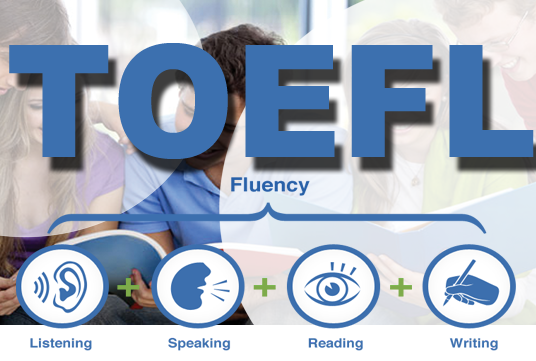
Studying in an English speaking University will prove advantageous in the job market. The TOEFL is largely known for its Internet based English language assessment test that measures the candidates ability to integrate and use all four skills: Reading, Listening, Speaking and Writing. It is easily accessible to test takers worldwide, with 130 countries and more than 7500 institutes accepting the TOEFL including top Universities in Australia, Canada, UK and US. The scores help determine student admissions and scholarships; higher scores provide better opportunities.
There is no passing or failing in the TOEFL. Universities and programs that accept TOEFL set their own score requirements that are based on certain English skills that students need to have. If the results are part of your application process, ensure that you take the test in time. Candidates giving the TOEFL develop a higher level of English skills, and are able to effectively communicate and succeed in an academic setting. Taking the TOEFL test is convenient because you can choose from various test site locations, you will also have access to online practise material which will help you prepare for the test day. The TOEFL is completely academic which is why it is important to demonstrate the language skills learnt in a classroom. The test uniquely combines more than one language skill. For example, you are asked to read a passage, listen to a lecture, and then write an essay based on what you've read in the passage and heard in the lecture. The TOEFL ibt is fair in its testing, and all candidates have the same testing experience, these scores are checked by certified experts. The TOEFL provides accurate scoring, this helps test takers get noticed. The candidates that score well in the TOEFL prove that they mastered the skills, and have what it takes to pursue a higher education overseas.
For candidates who are nervous on speaking in front of an examiner, the TOEFL proves to be an ideal test for most test takers since all the four sections are computer based. The TOEFL has been taken by over 20 million people and helps universities in the decision making process
Your scores will be available online 10 days after you have taken the test. The scores you receive will be valid for a period of two years, after that you will not be able to use them. So if you are looking to study overseas after this period, you will have retake the test. TOEFL is a renowned English language test, and is recognized by the top Universities for its unique testing techniques.
The TOEFL test is the most widely respected English-language test in the world, recognized by more than 10,000 colleges, universities and agencies in more than 130 countries, including Australia, Canada, the U.K. and the United States. Wherever you want to study, the TOEFL test can help you get there.
Why TOEFL Exam is required?
Studying in an English speaking University will prove advantageous in the job market. The TOEFL is largely known for its Internet based English language assessment test that measures the candidates ability to integrate and use all four skills: Reading, Listening, Speaking and Writing. It is easily accessible to test takers worldwide, with 130 countries and more than 7500 institutes accepting the TOEFL including top Universities in Australia, Canada, UK and US. The scores help determine student admissions and scholarships; higher scores provide better opportunities.
There is no passing or failing in the TOEFL. Universities and programs that accept TOEFL set their own score requirements that are based on certain English skills that students need to have. If the results are part of your application process, ensure that you take the test in time. Candidates giving the TOEFL develop a higher level of English skills, and are able to effectively communicate and succeed in an academic setting. Taking the TOEFL test is convenient because you can choose from various test site locations, you will also have access to online practise material which will help you prepare for the test day. The TOEFL is completely academic which is why it is important to demonstrate the language skills learnt in a classroom. The test uniquely combines more than one language skill. For example, you are asked to read a passage, listen to a lecture, and then write an essay based on what you've read in the passage and heard in the lecture. The TOEFL ibt is fair in its testing, and all candidates have the same testing experience, these scores are checked by certified experts. The TOEFL provides accurate scoring, this helps test takers get noticed. The candidates that score well in the TOEFL prove that they mastered the skills, and have what it takes to pursue a higher education overseas.
For candidates who are nervous on speaking in front of an examiner, the TOEFL proves to be an ideal test for most test takers since all the four sections are computer based. The TOEFL has been taken by over 20 million people and helps universities in the decision making process
Your scores will be available online 10 days after you have taken the test. The scores you receive will be valid for a period of two years, after that you will not be able to use them. So if you are looking to study overseas after this period, you will have retake the test. TOEFL is a renowned English language test, and is recognized by the top Universities for its unique testing techniques.
Why are GRE scores important?
Your GRE score is similar to your IQ. Admission committees in any university will immediately judge you as being 'super smart', smart or above average based on what your score is.
Top universities around the world want to accept only 'super smart' students, and this translates into a 320+ GRE score. All the universities in the US, UK, Europe, Singapore and Australia consider the GRE as a standard measure for evaluating an applicant's ability to cope with the curriculum.
Why was the GRE exam created?
If we had to trace the history of how the GRE came into being, we would be heading way back to the end of the second world war. Yes, that's how further back the story goes!
The Educational Testing service (ETS) was given the task of creating an exam that would act as a universal measure of the verbal reasoning, quantitative reasoning, analytical writing, and critical thinking skills of students, acquired over a long period of learning.
This endeavour in the year 1949, gave birth to the Graduate Record Examination (GRE) as we know it today.
Why should you take the GRE over GATE?
The purpose of taking these two exams - GRE and GATE, is completely different.
You cannot apply for Master's programs in Indian universities with a GRE score. Similarly, you cannot send your GATE rank to a university abroad and expect admission based on it. A choice between GRE and GATE, is therefore a choice between a Master's in India and a Master's abroad.
If you have a strong academic and professional profile, and hunger for success, you should probably take up the GRE and apply for a Master's abroad. While a Master's in India will cost you much less than an MS in the US, the academic value and the amount of leverage the international Master's program will give to your career is incomparable.
Why should you take the GRE over the GMAT?
The GMAT exam is designed specially for applicants to business programs.
Hence, if you are applying for a business program, and the college you want to apply to is amongst the only few institutions that do not accept the GRE, you would have no choice but to take the GMAT.
Hard luck!
However, if you are applying for an MS program, your GMAT scores will not be accepted, so you need not bother to take the GMAT.
As the GMAT assesses business school applicants, it is different from the GRE, which is taken by students applying for programs in a variety of subjects.
Your GRE score is similar to your IQ. Admission committees in any university will immediately judge you as being 'super smart', smart or above average based on what your score is.
Top universities around the world want to accept only 'super smart' students, and this translates into a 320+ GRE score. All the universities in the US, UK, Europe, Singapore and Australia consider the GRE as a standard measure for evaluating an applicant's ability to cope with the curriculum.
Why was the GRE exam created?
If we had to trace the history of how the GRE came into being, we would be heading way back to the end of the second world war. Yes, that's how further back the story goes!
The Educational Testing service (ETS) was given the task of creating an exam that would act as a universal measure of the verbal reasoning, quantitative reasoning, analytical writing, and critical thinking skills of students, acquired over a long period of learning.
This endeavour in the year 1949, gave birth to the Graduate Record Examination (GRE) as we know it today.
Why should you take the GRE over GATE?
The purpose of taking these two exams - GRE and GATE, is completely different.
You cannot apply for Master's programs in Indian universities with a GRE score. Similarly, you cannot send your GATE rank to a university abroad and expect admission based on it. A choice between GRE and GATE, is therefore a choice between a Master's in India and a Master's abroad.
If you have a strong academic and professional profile, and hunger for success, you should probably take up the GRE and apply for a Master's abroad. While a Master's in India will cost you much less than an MS in the US, the academic value and the amount of leverage the international Master's program will give to your career is incomparable.
Why should you take the GRE over the GMAT?
The GMAT exam is designed specially for applicants to business programs.
Hence, if you are applying for a business program, and the college you want to apply to is amongst the only few institutions that do not accept the GRE, you would have no choice but to take the GMAT.
Hard luck!
However, if you are applying for an MS program, your GMAT scores will not be accepted, so you need not bother to take the GMAT.
As the GMAT assesses business school applicants, it is different from the GRE, which is taken by students applying for programs in a variety of subjects.
Why You Should Take the SAT?
The SAT is the nation's most widely used admissions test among colleges and universities. It tests students' knowledge of subjects that are necessary for college success: reading, writing, and mathematics. The SAT assesses the critical thinking skills students need for academic success in college - skills that students learned in high school.
The SAT is typically taken by high school juniors and seniors. It tells students how well they use the skills and knowledge they have attained in and outside of the classroom-including how they think, solve problems, and communicate. The SAT is an important resource for colleges. It's also one of the best predictors of how well students will do in college.
Each section of the SAT is scored on a scale of 200-800, with two writing subscores for multiple-choice questions and the essay. It is administered seven times a year in the U.S. and U.S. territories, including Puerto Rico, and six times a year overseas.
The Unscored Section
In addition to the nine scored sections of the SAT, there is one 25-minute section that we use to ensure that the SAT continues to be a fair and valid test. Don't be worried: the section does not count towards your score. It may be a critical reading, mathematics, or writing multiple-choice section. It is common test development to use an unscored section to try out new questions for future editions of the test. It also ensures that scores on new editions of the SAT are comparable to scores on earlier editions of the test. This helps to ensure the fairness of the SAT, which is one of our primary objectives.
Test Order
The SAT is comprised of 10 total testing sections. The first section is always a 25-minute essay, and the last section is always a 10-minute multiple-choice writing section. Sections two through seven are 25-minute sections. Sections eight and nine are 20-minute sections. Test-takers sitting next to each other in the same session may have test books with entirely different content orders for sections two through nine (mathematics, critical reading, and writing).
When should you take SAT Subject Tests?
Most students take SAT Subject Tests toward the end of their junior year or at the beginning of their senior year.
Take tests such as World History, Biology E/M, Chemistry, or Physics as soon as possible after completing the course in the subject, while the material is still fresh in your mind. If you take such courses in your freshman or sophomore year, and you are eligible for fee waivers, you can request a fee waiver to test before your junior year. For foreign language tests, you'll do better after at least two years of study.
The SAT is the nation's most widely used admissions test among colleges and universities. It tests students' knowledge of subjects that are necessary for college success: reading, writing, and mathematics. The SAT assesses the critical thinking skills students need for academic success in college - skills that students learned in high school.
The SAT is typically taken by high school juniors and seniors. It tells students how well they use the skills and knowledge they have attained in and outside of the classroom-including how they think, solve problems, and communicate. The SAT is an important resource for colleges. It's also one of the best predictors of how well students will do in college.
Each section of the SAT is scored on a scale of 200-800, with two writing subscores for multiple-choice questions and the essay. It is administered seven times a year in the U.S. and U.S. territories, including Puerto Rico, and six times a year overseas.
The Unscored Section
In addition to the nine scored sections of the SAT, there is one 25-minute section that we use to ensure that the SAT continues to be a fair and valid test. Don't be worried: the section does not count towards your score. It may be a critical reading, mathematics, or writing multiple-choice section. It is common test development to use an unscored section to try out new questions for future editions of the test. It also ensures that scores on new editions of the SAT are comparable to scores on earlier editions of the test. This helps to ensure the fairness of the SAT, which is one of our primary objectives.
Test Order
The SAT is comprised of 10 total testing sections. The first section is always a 25-minute essay, and the last section is always a 10-minute multiple-choice writing section. Sections two through seven are 25-minute sections. Sections eight and nine are 20-minute sections. Test-takers sitting next to each other in the same session may have test books with entirely different content orders for sections two through nine (mathematics, critical reading, and writing).
When should you take SAT Subject Tests?
Most students take SAT Subject Tests toward the end of their junior year or at the beginning of their senior year.
Take tests such as World History, Biology E/M, Chemistry, or Physics as soon as possible after completing the course in the subject, while the material is still fresh in your mind. If you take such courses in your freshman or sophomore year, and you are eligible for fee waivers, you can request a fee waiver to test before your junior year. For foreign language tests, you'll do better after at least two years of study.
Preparing for and taking the GMAT exam is the key to your future success.
Because the GMAT exam assesses higher order reasoning, a skill that improves with practice, preparing for the exam takes a great deal of time and practice - significantly more than for a conventional test.
However, doing well on the GMAT exam is very important for your future success, not just in school but in your career. Here are 4 reasons why:
1: Taking the GMAT exam alerts programs around the world that you are serious about your pursuit of a graduate management education, thereby increasing your likelihood of admission.
2: More than 5,900 graduate management programs around the world rely on the GMAT exam as the most reliable predictor of your success.
3: The GMAT exam is required for admission to many of the world's top business schools.
4: Programs that require the GMAT attract the best students, which not only helps guarantee a rich educational environment, but also gives you access to an influential network of future business leaders that will enrich your career many times over.
GMAT Exam Scores
The GMAT exam is much more than just a score. It puts you in charge of your future.
After you take the GMAT exam, you will receive five scores: Analytical Writing Assessment, Integrated Reasoning, Quantitative, Verbal, and Total. A new score feature now enables you to preview your unofficial GMAT scores before deciding whether to accept or cancel them. The change gives you more control of your score reporting. Learn what GMAT scores mean to you and to admissions professionals.